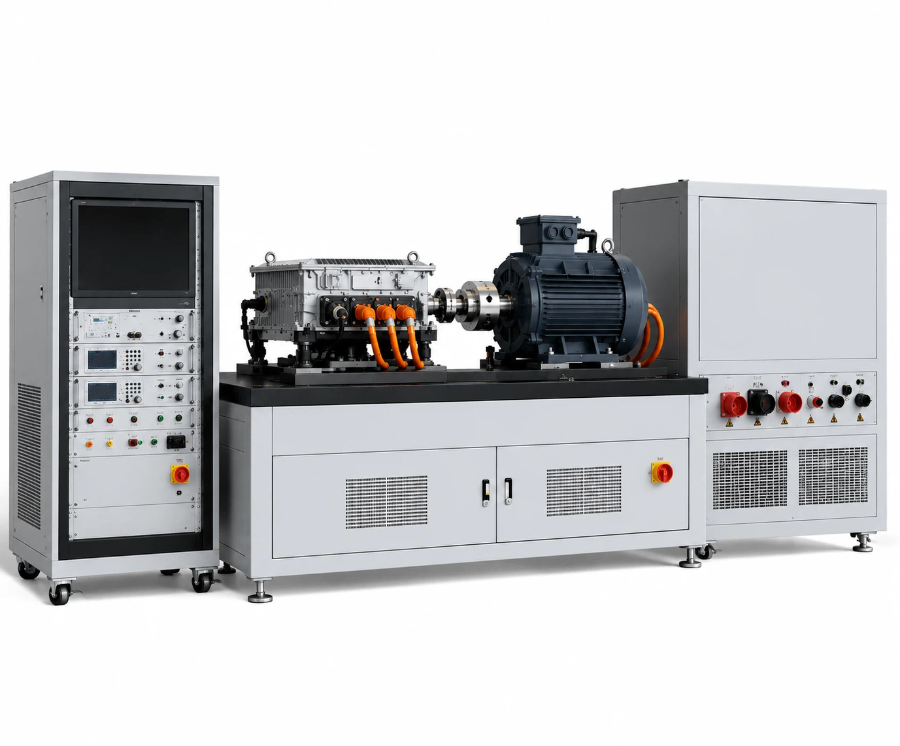
An E-Drive EMC Test Bench is a specialized testing platform used to evaluate the electromagnetic compatibility (EMC) performance of electric vehicle powertrain systems. It simulates the operating conditions of key E-Drive components, including electric motors, inverters, controllers, and high-voltage power electronics, allowing engineers to measure electromagnetic emissions and immunity levels.
By recreating real-world driving scenarios in a controlled laboratory environment, the test bench helps identify potential electromagnetic interference (EMI) issues before a vehicle reaches production. This enables
As EV powertrains become more powerful and electronically complex, electromagnetic compatibility (EMC) testing is essential to ensure reliable operation and regulatory compliance. E-Drive systems generate high-frequency switching signals and large currents that can create electromagnetic interference (EMI), potentially affecting nearby electronic components.
Modern vehicles rely on dozens of interconnected electronic control units (ECUs), sensors, and communication networks. EMC testing helps verify that the E-Drive system does not disrupt critical functions such as braking, steering, battery management, or vehicle communication systems.
Automotive manufacturers must meet strict EMC regulations before vehicles can enter global markets. EMC testing allows engineers to evaluate emissions and immunity performance, helping products comply with international standards and certification requirements.
Undetected electromagnetic issues can lead to system malfunctions, communication errors, or unexpected performance problems. By identifying EMC risks early in development, manufacturers can improve vehicle reliability, reduce redesign costs, and enhance overall safety.
Testing E-Drive components in a controlled EMC environment enables engineers to detect and resolve problems before full vehicle integration. This shortens development cycles and reduces the risk of costly delays during validation and certification.
An E-Drive EMC Test Bench is composed of multiple integrated systems designed to simulate real driving conditions while accurately measuring electromagnetic emissions and immunity. Each component plays a specific role in ensuring reliable and repeatable EMC testing results.
The power supply provides stable high-voltage DC or AC energy to the E-Drive system under test. It simulates the vehicle’s battery pack and ensures consistent operating conditions during EMC testing.
This subsystem mimics real-world mechanical load conditions of the electric motor. It allows engineers to test the E-Drive system under different torque and speed scenarios, ensuring accurate EMC behavior under dynamic conditions.
This system collects electromagnetic emission data, voltage fluctuations, and current signals in real time. High-precision sensors and data acquisition modules ensure reliable analysis of EMC performance.
These instruments are used to detect and analyze electromagnetic interference, including conducted and radiated emissions. They ensure compliance with automotive EMC standards.
The control system manages the entire test process, including parameter setting, scenario simulation, and automated test execution. It improves efficiency and reduces human error.
| Component | Function | Importance |
|---|---|---|
| Power Supply System | Provides stable electrical power | Ensures realistic operating conditions |
| Load Simulation System | Simulates mechanical load of motor | Enables real-world performance testing |
| Data Acquisition System | Collects electrical and EMI data | Critical for accurate analysis |
| EMC Measurement Instruments | Detects emissions and interference | Ensures compliance with EMC standards |
| Control & Automation System | Manages and automates testing | Improves efficiency and repeatability |
Together, these components form a complete testing environment that allows engineers to evaluate E-Drive systems under controlled yet realistic EMC conditions.
E-Drive EMC test benches play a critical role in helping electric vehicle manufacturers meet strict electromagnetic compatibility requirements. These systems are designed to replicate standardized test conditions so that EMC performance can be validated early and accurately before vehicle certification.
EMC test benches are configured to comply with international automotive standards such as CISPR 25, ISO 11452, and IEC-based testing procedures. By following these standardized test methods, manufacturers can ensure that their E-Drive systems meet regulatory expectations across different markets.
To ensure compliance, the test bench recreates controlled electromagnetic environments that mirror official certification labs. This includes standardized cable setups, load conditions, and measurement distances for both conducted and radiated emissions testing.
A key requirement of EMC compliance is ensuring that systems not only minimize electromagnetic emissions but also resist external interference. Test benches evaluate both aspects:
Emission testing: Measures unwanted electromagnetic energy generated by the E-Drive system
Immunity testing: Assesses system stability under external electromagnetic disturbances
By identifying EMC issues during the development phase, manufacturers can avoid failures during formal certification testing. This reduces costly redesigns, shortens approval timelines, and improves the likelihood of first-pass compliance.
Modern EV development is iterative, with frequent software and hardware updates. EMC test benches enable continuous validation throughout the product lifecycle, ensuring that compliance is maintained even after system modifications.
Electromagnetic Compatibility (EMC) testing for electric drive (E-Drive) systems is crucial for ensuring both vehicle safety and performance. Modern E-Drive systems—including electric motors, inverters, and power electronics—can generate and be affected by electromagnetic interference (EMI). Without proper control, EMI may disrupt key vehicle functions, potentially causing safety hazards such as unintended acceleration, braking failures, or malfunctions in driver assistance systems.
EMC testing evaluates how E-Drive components behave under various electromagnetic conditions. By identifying vulnerabilities during the design phase, engineers can implement solutions such as shielding, filtering, and grounding. These measures reduce the risk of component failure due to EMI, ensuring that critical systems operate reliably and that passengers remain safe in real-world driving scenarios.
Beyond safety, EMC testing improves system efficiency and performance. Properly tested E-Drive systems experience reduced energy losses from unintended currents or noise, which contributes to longer range and smoother operation. Additionally, minimizing EMI helps maintain sensor accuracy and control system stability, directly affecting vehicle handling, responsiveness, and driving experience.
Rigorous EMC testing is not only a regulatory requirement but also a cornerstone of engineering reliability. By proactively addressing electromagnetic issues, manufacturers can deliver electric vehicles that operate safely, efficiently, and consistently under diverse real-world conditions.
Choosing the right EMC test bench is essential for ensuring accurate and efficient electromagnetic compatibility testing. A reliable testing solution helps manufacturers identify potential EMC issues early in the development process, reducing redesign costs and minimizing the risk of product failures.
The right EMC test bench also supports compliance with industry standards and regulatory requirements, helping businesses streamline certification processes and avoid costly delays. In addition, advanced testing capabilities improve product reliability and performance by ensuring stable operation in complex electromagnetic environments.
By investing in a test bench that meets current and future testing needs, companies can enhance product quality, accelerate time-to-market, and gain a stronger competitive advantage in the automotive and electronics industries.
Ensuring EMC is essential for modern E-Drive systems to guarantee vehicle safety, performance, and regulatory compliance. An E-Drive EMC Test Bench allows engineers to detect issues early, improve reliability, and streamline development.
For advanced and reliable EMC testing solutions, ATESTMAN offers professional test benches designed for modern electric vehicle development, helping businesses ensure compliant and high-performance E-Drive systems.



Mr. Lind
Email:[email protected]
Hongkong office: Atestman Co. Limited
Shenzhen office: Atestman Technology Co., Ltd.
Factory site: High-tech Park, Hefei, Anhui , China