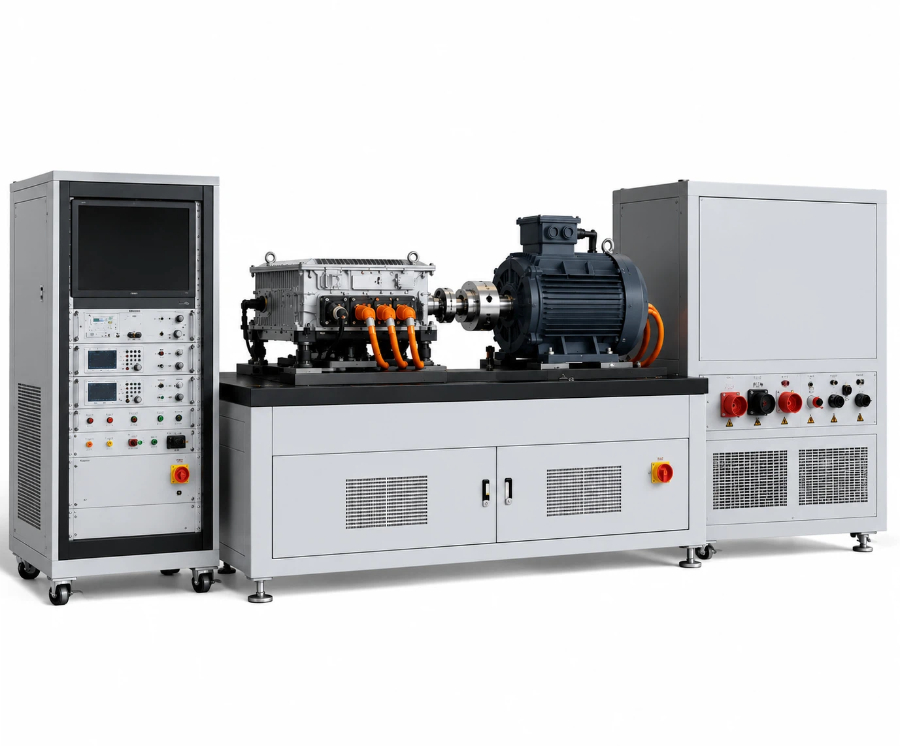
Bringing EMC testing earlier in the EV development process can significantly reduce overall program costs. Instead of waiting until final validation to discover interference issues, engineers can identify and solve problems at the subsystem or prototype stage, when changes are faster, simpler, and far less expensive.
This front-loading approach helps avoid costly late-stage redesigns, repeated prototype builds, and certification delays. Issues such as poor grounding, insufficient shielding, or noisy cable routing are much cheaper to fix early than after tooling has been finalized or the vehicle architecture has been locked in.
From a financial perspective, the biggest advantage is reduced uncertainty. EMC problems found late often lead to unplanned engineering labor, retesting fees, supplier coordination, and launch delays. By shifting testing upstream, companies can create a more predictable development budget and reduce the risk of surprise expenses.
Front-loading EMC validation also supports better resource allocation. Instead of treating EMC as a final gate, teams can use early testing to guide design decisions, improve compliance readiness, and reduce the number of physical prototypes needed. In this way, EMC testing becomes a cost-saving strategy rather than a costly correction step.
Full-vehicle chamber testing is one of the most expensive stages in EV validation. It requires a complete vehicle, specialized facilities, and significant scheduling time, which can quickly increase development costs.
By moving EMC evaluation earlier and testing subsystems on an E-Drive bench, teams can reduce their dependence on repeated full-vehicle chamber sessions. This allows engineers to identify electromagnetic issues before they reach the final integration stage.
Instead of using valuable chamber time to troubleshoot basic design problems, developers can reserve it for final verification and compliance checks. That makes the testing process more efficient and helps avoid paying premium rates for issues that could have been solved earlier.
Reducing chamber usage also improves project planning. Full-vehicle chamber availability is often limited, and delays in booking time can slow down the entire development schedule. When more issues are resolved in bench testing, the final chamber phase becomes shorter, more focused, and less likely to require repeat visits.
In financial terms, this lowers direct testing costs and reduces the indirect cost of delays. It also helps engineering teams use their resources more effectively, since less time is spent on late-stage troubleshooting and more time is spent on design optimization and validation readiness.
Early EMC testing helps engineers find the source of interference faster, which shortens the time needed for debugging. Instead of waiting until final vehicle validation to uncover a problem, teams can isolate issues at the subsystem level and identify whether they come from the inverter, motor, wiring, shielding, or control software.
When EMC issues are tested on a bench setup, engineers can reproduce problems in a controlled environment. This makes it easier to compare test results, narrow down the affected component, and determine the exact cause of the failure. As a result, troubleshooting becomes more focused and less dependent on trial-and-error.
A bench-based setup also speeds up repeated testing. Once a change is made, engineers can quickly retest the same configuration without rebuilding a full vehicle. This reduces downtime and allows teams to move through debug cycles much faster.
Faster root-cause analysis gives design teams immediate feedback on what needs to change. Whether the fix involves cable routing, grounding strategy, filtering, or enclosure design, engineers can validate improvements earlier and avoid carrying unresolved issues into later project stages.
Improved debugging efficiency reduces wasted engineering hours, unnecessary prototype revisions, and delays caused by unclear failure sources. In practice, this means teams can spend less time diagnosing problems and more time refining the system for compliance, reliability, and production readiness.
One of the hidden cost drivers in EV development is over-engineering. When teams are uncertain about EMC performance, they often add extra shielding, heavier enclosures, thicker cables, or more complex filtering than the design actually needs. Early EMC testing helps reduce that uncertainty by giving engineers more confidence in the actual performance of the system.
With clearer test results, teams can avoid relying on worst-case assumptions. Instead of adding extra material “just in case,” they can make more precise design choices based on real data. This helps keep the architecture lean, while still meeting EMC and reliability targets.
It also has a direct impact on material cost, weight, and packaging. Less unnecessary shielding, fewer oversized parts, and a more optimized layout all contribute to a lower-cost design that is easier to scale into production.
Early EMC testing helps manufacturers catch problems before the vehicle reaches customers. In EV development, electromagnetic issues can affect critical systems such as motor control, battery management, charging, and communication networks, so discovering them late can be expensive and damaging.
When EMC validation is done upstream, teams have more time to correct weak points in critical areas, including:
Shielding effectiveness
Grounding and bonding
Wiring and harness routing
Component placement and layout
This reduces the chance that an issue will slip into production and later trigger a recall or warranty claim.
Post-launch fixes are often far more costly than design-stage corrections. A recall or warranty event can involve service labor, replacement parts, logistics, vehicle transportation, customer support, and reputational damage.
These costs can continue to drain profit long after launch.
By identifying EMC risks early, companies can improve compliance confidence, increase system reliability, reduce field failure rates, and lower long-term warranty exposure. This approach also improves confidence before mass production begins.
Instead of reacting to field failures, engineering teams can launch with a more stable design, fewer unexpected issues, and a much lower risk of surprise support costs. That makes the product easier to support and more profitable over its lifecycle.
Transitioning to early-stage E-Drive EMC bench testing ("front-loading") cuts EV development costs by identifying electromagnetic interference before vehicle architecture is locked in. This strategy reduces reliance on expensive full-vehicle chamber time, accelerates root-cause debugging, and prevents costly over-engineering or post-launch recalls.
As a specialist in EV powertrain testing, Atestman provides the exact high-fidelity, low-noise E-Drive EMC test benches needed to execute this approach. Their highly shielded dynamometer systems allow engineers to isolate high-voltage (800V/SiC) interference early, transforming EMC validation from a late-stage headache into a front-end cost-saving tool.



Mr. Lind
Email:[email protected]
Hongkong office: Atestman Co. Limited
Shenzhen office: Atestman Technology Co., Ltd.
Factory site: High-tech Park, Hefei, Anhui , China