You face new problems as more new energy vehicles use the 800V architecture. These vehicles switch faster and make more power noise. This makes EMC Testing harder to do. High-voltage systems can mess up parts that are close by. You need shielding and good grounding to keep things safe. These steps help systems work well and stay reliable. System-level tests let you find interference between high- and low-voltage parts. More people are using this technology now:
In 2024, 6.9% of new energy vehicles use the 800V architecture.
The rate may go up to 9.5% in 2025.
Experts think over 35% will use it by 2030.
EMC testing for 800V vehicles is hard because interference is stronger. Use better shielding and grounding to keep systems safe.
Use adaptive testing methods to match new standards. Modular setups and real-time checks make testing better.
New materials, like advanced foams and cable shields, help block electromagnetic noise. Use these materials to meet strict EMC rules.
Design plans should shrink loop areas and stop fast switching. This lowers the chance of interference in vehicle systems.
Keep learning about EMC rules and testing tools. Following new standards keeps your vehicles safe and reliable.
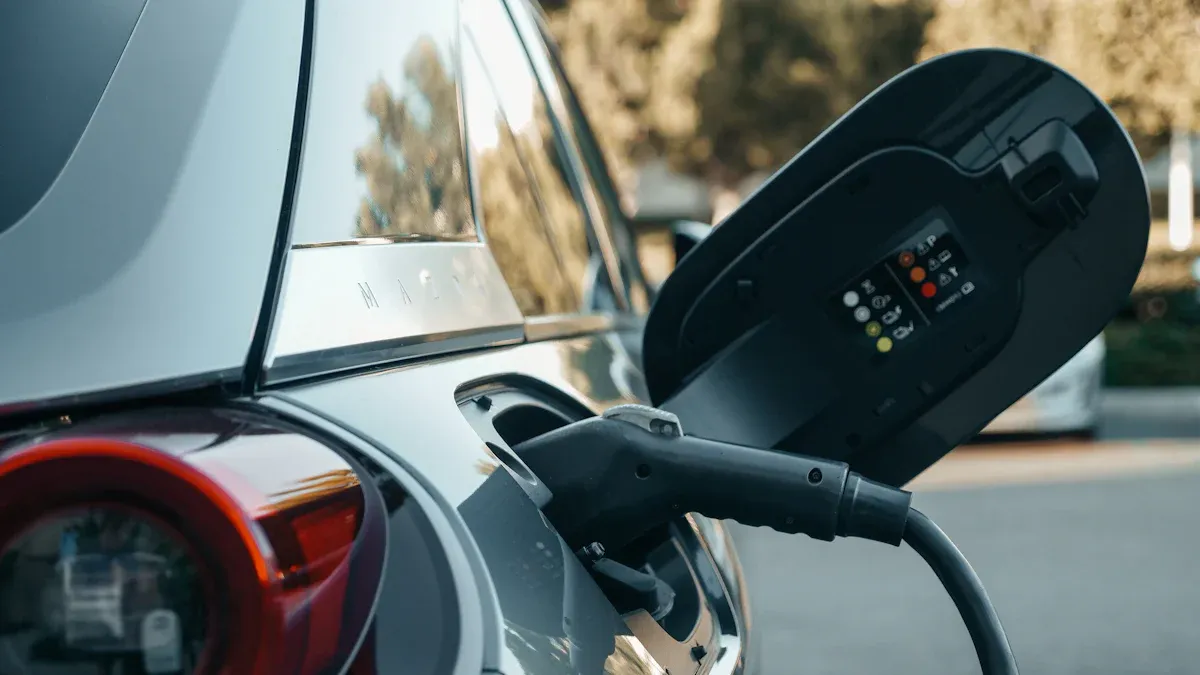
When you use 800V systems, the electromagnetic interference is much stronger than in lower voltage vehicles. The main things that cause this interference are:
Power converters like IGBTs and SiC MOSFETs switch very fast. They make a lot of electrical noise.
Electric motors use high power and change impedance. This causes more electromagnetic emissions.
Traction batteries and their connectors carry big currents. They add to the electromagnetic field.
Shielded and unshielded cables are close together. This creates strong magnetic fields.
Outside sources, such as battery chargers and wireless charging stations, can also affect your vehicle’s systems.
All these things make EMC Testing harder. The interference can reach many parts of the vehicle at the same time.
You will see new problems when you put all the systems together in 800V architectures. Using 800V makes power distribution easier and cuts down on wasted heat. But you also have to handle more heat and make sure everything works with older systems. Adding more electronic subsystems makes it harder to keep everything working without electromagnetic issues. Sometimes, systems do not work well together and this can cause recalls. New technology moves fast, so you need to change how you design and test for EMC.
You must focus on power electronics in 800V vehicles. Wide-band-gap devices switch very quickly and can cause more electromagnetic problems. Their switching speeds can be over 10V/ns, so EMC Testing is even more important. Wireless communication modules in your vehicle can have trouble because of noise from high-voltage inverters and motors.
High-voltage inverters and motors make noise that can break wireless links. Advanced error correction and frequency hopping help fix this problem.
You need new ways to design and test so all these systems work together without interference.
There are new rules because more vehicles use the 800V architecture. Regulators now want lower electromagnetic emissions and better immunity. These rules help keep vehicles safe and working well. You must follow both international and local standards. Some important standards are:
ISO 21498: This standard tells what EMC is needed for high-voltage systems in electric vehicles.
CISPR 25: This rule limits radio disturbance in vehicles.
UNECE R10: This regulation is about electromagnetic compatibility for vehicles in Europe.
Note: Always check if these standards have changed. Regulators update rules to match new technology.
If you do not follow these rules, you might get fined or have trouble getting your vehicles approved. You could also have safety problems for your customers.
You need new ways to test because standards keep changing. Old EMC Testing may miss some problems in 800V systems. You should use adaptive testing that matches real-world conditions. Here are some ways to make your testing better:
Use modular test setups. These help you test different parts of the vehicle fast.
Try real-time monitoring. This lets you find problems right away.
Use simulation tools. These tools show how your vehicle acts in different places.
You can use a table to keep track of which tests go with each standard:
|
Standard |
Test Type |
Frequency |
|---|---|---|
|
ISO 21498 |
Emission/Immunity |
Every design step |
|
CISPR 25 |
Radiated Emission |
Final validation |
|
UNECE R10 |
System Integration |
Pre-production |
Using these new methods helps you follow the rules and keeps vehicles safe.
Measuring high-voltage signals in 800V systems is tough. The tools must handle quick voltage changes and lots of energy. Many high-voltage sources work well with steady signals. But they have trouble when voltage changes fast. This makes it hard to see how your system really acts during EMC Testing.
Here is a table that lists the main measurement problems you might face:
|
Challenge |
Description |
|---|---|
|
Voltage variation testing |
Fast voltage changes are hard to copy because sources have limits. |
|
High voltage source limitations |
Most sources are stable, but they cannot keep up with quick voltage shifts. |
|
Required output dynamic |
You need a source that can change by 500 V/ms or more for your needs. |
Pick your test equipment with care. Using the wrong tools means you might miss big problems. Always check if your measurement system can keep up with fast changes in 800V vehicle systems.
You also need to copy how your vehicle acts in real life. This is hard with 800V systems. Electromagnetic interference gets more tricky as voltage goes up. New materials and advanced tech make it even harder to guess what will happen.
When you try to model EMC behavior, you may face these issues:
Electromagnetic interference gets more complex at higher voltages.
Advanced materials and new tech add more unknowns to your models.
You can use a SPICE equivalent circuit modeling method to guess interference and test your solutions.
You should use both measurement and simulation together. This helps you find problems before your vehicle goes on the road. Good planning and the right tools make your EMC work better.
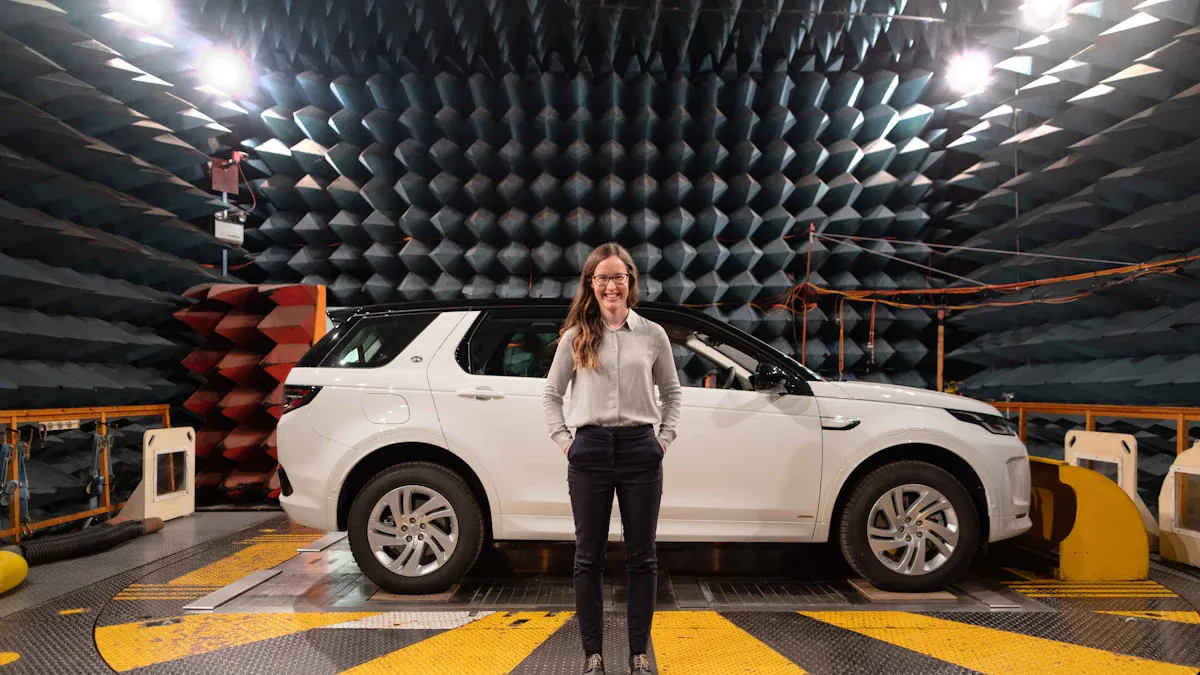
You can fix many electromagnetic problems in 800V vehicles by using stronger shielding and grounding. These ways help block bad signals and keep your systems safe. Here are some good techniques:
Metal shields can cut interference by up to 30 dB. You should put them around high-frequency RF modules.
Single-point grounding stops ground loops. This works well for low-frequency systems.
Multi-layer ground planes give noise a special path. This lowers noise moving between parts.
Ground stitching vias make a low-impedance path. They help stop electromagnetic leaks.
Low-pass filters block high-frequency noise on power lines.
Ferrite beads let DC current go through but stop high-frequency noise.
Decoupling capacitors keep voltage steady by sending high-frequency noise to ground.
Tip: Use a mix of these ways to get the best results in your EMC Testing.
You can see how much shielding helps by looking at this table:
|
Nanocomposite |
Average SET (dB) |
SEA (dB) |
SER (dB) |
|---|---|---|---|
|
DP25R3 |
22.4 |
N/A |
N/A |
|
DP30R3 |
25.8 |
20.4 |
5.4 |
These numbers show that better materials and designs can lower interference by over 25 dB.
New materials help your vehicle handle electromagnetic noise much better. You can use these new things to improve EMC Testing and keep your systems working right.
Better cable shielding now blocks over 60 dB of noise at many frequencies.
Advanced PCB layouts use careful routing and ground planes to lower interference.
Common mode and differential mode filters help stop bad signals from moving through wires.
dv/dt protection for motor windings keeps fast switching from causing problems.
Here is a table that compares new materials with old ones:
|
Material Type |
EMI Shielding Effectiveness (dB) |
Key Features |
|---|---|---|
|
TPU/Graphene Sandwich Foams |
17 - 21 |
Absorbs and reflects signals better with more graphene |
|
PU Nanocomposite Foams (0.35 wt% MWCNTs) |
27 |
Has a strong network for carrying electricity |
|
CPC Foams (Cell Size Increase) |
48.5 - 59.2 |
Bigger cells mean better conductivity and shielding |
You can see that new foams and composites work much better than old materials. They help you meet strict EMC Testing standards for 800V vehicles.
You need to look at the whole vehicle when you plan for electromagnetic compatibility. A good design stops problems before they start. Here are some strategies you can use:
Keep the loop area of wires small, especially for wires that carry fast-changing currents.
Shield wires that have high voltage changes or are sensitive to noise.
Avoid switching circuits faster than needed. Fast switching can make more electromagnetic noise.
Watch out for holes, slots, or seams in metal surfaces. These can act like antennas and let noise escape.
Note: You should always check your design for weak spots before you start EMC Testing.
By using these strategies, you can lower the risk of interference and make sure your 800V vehicle passes all tests. You will also help your vehicle stay safe and reliable on the road.
Wide bandgap devices like GaN and SiC are changing electric vehicles. These devices help make systems smaller and lighter. They also make systems more powerful. GaN devices can increase power density by 170%. Power modules can weigh 79% less than silicon ones. Some new models reach 99.0% peak efficiency. These devices switch faster and waste less energy. This means better performance and longer driving range.
Here is a table that shows how wide bandgap devices are growing:
|
Metric |
Value |
|---|---|
|
CAGR (2025-2033) |
15% |
|
Estimated Market Size (2033) |
$20 billion |
|
Dominant Region |
Asia-Pacific |
Asia-Pacific, especially China, is leading this change. Using more wide bandgap devices brings new electromagnetic problems. Faster switching makes more noise. You need to update EMC Testing methods to handle these changes.
New testing tools make your work easier and more exact. ZF built a special 800V Test & Validation Lab in the UK. This lab tests small modules and big truck axles. It uses advanced EMC and climate chambers. AVL made new simulation tools and active hybrid filters. These tools help lower electromagnetic noise in vehicles.
Next-generation testing equipment works with 800V and higher. You can test up to 300 kW of power in one unit. Some tools reach 2000V and keep high accuracy (≤0.1%) with very little noise. You can test three units at once. Safety features protect your team and equipment.
AI and machine learning will be used more in future testing labs. These technologies help you find problems faster and improve designs.
You will need these new tools as vehicles get more complex and rules get tougher. The auto EMC test market may reach over $2 billion by 2026. You must be ready for these changes to keep vehicles safe and reliable.
You will find new EMC problems in 800V vehicles. The interference is stronger now. Putting all the systems together is harder too. You can fix these problems with better shielding. Using new materials also helps a lot. Smart design is important for solving issues. You should watch for new rules that may change. Keep learning about EMC Testing to stay ready. Work with other engineers to share ideas. Try out new tools to help your work.
Always follow the newest standards and use better testing tools. This will help keep your vehicles safe and working well.
800V systems have stronger electromagnetic interference. Fast switching makes more noise. High currents also add to the noise. You need better shielding to block this interference. Good grounding helps keep systems safe.
Pick tools that handle fast voltage changes. Make sure they work with high energy. Check if your equipment supports quick switching. Look for tools that work with high voltages. Always read the specs before you start testing.
New materials block more electromagnetic noise. They help you follow strict standards. Nanocomposite foams give better protection than old materials. Advanced cable shields also work better than older ones.
You could have safety problems or product recalls. Regulators might fine you or stop sales. Always check for new rules to stay safe.



Mr. Lind
Email:[email protected]
Hongkong office: Atestman Co. Limited
Shenzhen office: Atestman Technology Co., Ltd.
Factory site: High-tech Park, Hefei, Anhui , China